
shell
ผู้เยี่ยมชม
benducket3211@gmail.com
Which Is Better for Your Project: Tack Welding vs Spot Welding? (111 อ่าน)
25 ก.ค. 2569 21:43
Understanding tack welding vs spot welding is essential for anyone working in metal fabrication, automotive manufacturing, construction, or industrial welding. Although both techniques are used to join metal components, they serve different purposes and require different equipment, processes, and applications. Choosing the right method can improve weld quality, reduce production time, and ensure the finished product meets strength and durability requirements.
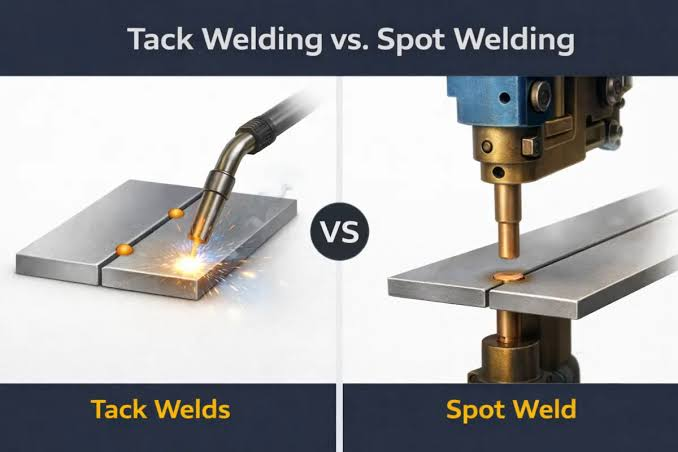
In the comparison of tack welding vs spot welding, tack welding is primarily a temporary welding process that holds metal pieces in position before the final weld is completed. Spot welding, on the other hand, is a permanent resistance welding process that joins overlapping metal sheets by applying electrical current and pressure. While both methods contribute to successful fabrication, understanding their differences helps welders select the most suitable technique for each project.
Industries such as automotive production, sheet metal fabrication, pipeline construction, aerospace manufacturing, and structural steel fabrication regularly use one or both of these welding methods. Knowing where each process performs best allows fabricators to improve efficiency while maintaining consistent weld quality.
Tack Welding vs Spot Welding Performance
When comparing tack welding vs spot welding, the biggest difference lies in their purpose. Tack welding is intended to temporarily secure components before the final weld bead is applied. These small welds maintain proper alignment, prevent movement caused by heat expansion, and allow welders to verify measurements before completing the permanent weld. Tack welding is commonly performed using MIG welding, TIG welding, or stick welding, depending on the material and project requirements.
Spot welding creates a permanent joint by passing a high electrical current through two overlapping metal sheets while applying pressure with copper electrodes. The electrical resistance generates heat, melting a small section of the metal to create a strong weld nugget. This process is widely used in mass production because it is fast, repeatable, and highly efficient for joining thin sheet metal.
Another important distinction in tack welding vs spot welding involves equipment. Tack welding requires conventional arc welding equipment, filler material when needed, and standard welding techniques. Spot welding requires specialized resistance welding machines designed to deliver controlled electrical current and pressure simultaneously. Because of this difference, spot welding is generally found in factories and manufacturing facilities, while tack welding is commonly used in workshops, construction sites, and fabrication shops.
Heat control also differs between the two methods. Tack welding introduces localized heat through an electric arc, allowing the welder to adjust penetration and weld size according to the application. Spot welding concentrates heat internally between metal sheets, minimizing surface distortion while creating a permanent connection without additional filler metal.
Tack Welding vs Spot Welding Applications
The practical comparison of tack welding vs spot welding becomes more meaningful when examining real-world applications. Tack welding is widely used in structural steel fabrication where beams, columns, and framework must remain perfectly aligned before permanent welding begins. It is also common in pipeline construction, pressure vessel fabrication, heavy machinery manufacturing, and custom metal fabrication because it provides flexibility during assembly.
Automotive repair shops frequently use tack welding when replacing body panels, repairing frames, or fabricating custom components. Temporary tack welds allow technicians to confirm alignment before completing continuous welds that permanently join the parts.
Spot welding dominates automotive manufacturing because thousands of overlapping sheet metal panels must be joined quickly and consistently. Vehicle doors, roofs, floor pans, body shells, and structural reinforcements are commonly assembled using resistance spot welding. The process provides strong, repeatable joints while supporting high-volume production.
Sheet metal fabrication also highlights the differences between tack welding vs spot welding. Tack welding is preferred when final weld beads are required along the joint or when parts need adjustment before completion. Spot welding is selected when overlapping sheet metal requires permanent joining without continuous weld seams. This makes spot welding highly effective in appliance manufacturing, metal furniture production, HVAC systems, and electrical enclosures.
Aerospace engineering, agricultural machinery, marine construction, and industrial equipment manufacturing often combine both methods depending on design requirements. Modern fabrication facilities frequently use tack welding during initial assembly and spot welding where permanent sheet metal joints provide the most efficient solution.
Tack Welding vs Spot Welding Selection
Choosing between tack welding vs spot welding depends on several important factors, including material type, joint design, production volume, and project goals. Tack welding is ideal whenever metal components require temporary positioning before final welding. It allows adjustments during assembly and helps reduce distortion by maintaining proper alignment throughout the welding process.
Spot welding is more suitable for permanent joining of thin overlapping metal sheets where speed and consistency are priorities. Since no filler material is normally required, the process supports rapid production with minimal finishing work. This makes spot welding highly economical for large-scale manufacturing operations.
Material thickness also influences the selection process. Tack welding works effectively on thin sheet metal as well as thick structural steel because weld size and penetration can be adjusted according to project requirements. Spot welding performs best on relatively thin metal sheets where electrical resistance can generate sufficient heat to create a strong weld nugget without excessive distortion.
Inspection remains important regardless of the welding method. Tack welds should always be checked before final welding to ensure proper fusion and alignment. Spot welds require quality verification to confirm adequate penetration, weld strength, and consistency throughout the assembly.
As welding technology continues to advance, modern inverter welding machines improve tack welding precision, while automated resistance welding systems increase spot welding speed and accuracy. Skilled welders understand that both processes have unique advantages and often complement each other within the same manufacturing project.
Conclusion
The comparison of tack welding vs spot welding demonstrates that both methods are valuable but serve different purposes in metal fabrication and manufacturing. Tack welding is primarily used for temporary positioning, accurate alignment, and preparation before permanent welding, making it essential in structural fabrication, pipeline construction, heavy equipment manufacturing, and custom metalworking. Spot welding is a permanent resistance welding process designed for fast, efficient joining of overlapping sheet metal, making it indispensable in automotive production, appliance manufacturing, and high-volume industrial fabrication.
Understanding the differences between tack welding vs spot welding helps fabricators choose the most effective technique based on material thickness, joint configuration, production requirements, and desired weld quality. By selecting the appropriate welding process and applying proper preparation, heat control, and inspection practices, welders can achieve stronger joints, improved productivity, and long-lasting performance across a wide range of industrial and commercial applications.
43.242.176.123
shell
ผู้เยี่ยมชม
benducket3211@gmail.com