
shell
ผู้เยี่ยมชม
benducket3211@gmail.com
How Can a Snap Action Switch Improve Electrical Control and Equipment Reliability? (26 อ่าน)
30 ต.ค. 2569 16:41
A snap action switch is an important electrical component designed to provide fast, reliable, and precise switching in a wide range of applications. It operates through a specialized mechanism that rapidly changes the position of its electrical contacts when the actuator reaches a specific point. This quick movement helps reduce the time contacts spend transitioning between states, making snap action switches suitable for equipment that requires consistent electrical control. These switches are widely used in household appliances, industrial machinery, automotive systems, electronic devices, and safety equipment.
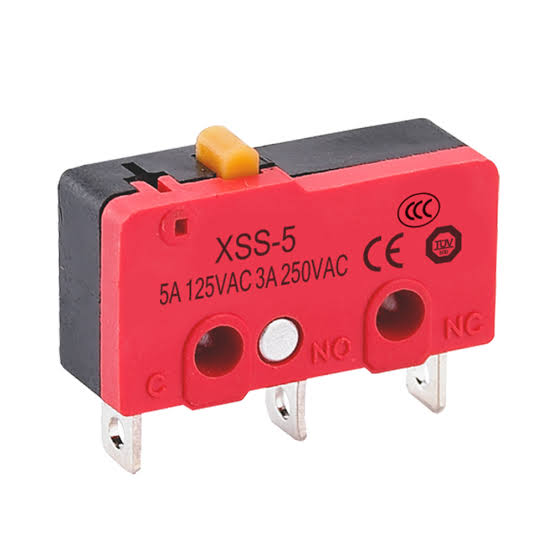
As modern industries demand greater reliability, efficiency, and precision, snap action switches continue to play an important role in electrical and mechanical systems. Their compact design, consistent operating characteristics, and versatility make them valuable for applications where accurate position detection and dependable circuit switching are essential. Understanding snap action switch technology, its features, and its applications can help engineers, manufacturers, and buyers select the right component for their specific requirements.
Understanding Snap Action Switch Technology
A snap action switch is an electromechanical switching device that uses a spring mechanism to move its contacts rapidly between two positions. Unlike a conventional switch that may move its contacts more gradually, a snap action mechanism produces a quick transition once a particular operating point is reached. This behavior helps provide consistent switching characteristics and can reduce contact arcing under suitable electrical operating conditions.
The operating mechanism generally includes an actuator, a spring or snap mechanism, electrical contacts, terminals, and a protective housing. When an external force is applied to the actuator, the internal mechanism stores mechanical energy until it reaches a predetermined point. The mechanism then releases that energy, causing the contacts to change position quickly. When the force is removed, the switch may return to its original position, depending on its design.
Many snap action switches are designed as miniature snap action switches, making them useful in equipment with limited installation space. These compact components are often selected when a machine needs accurate position detection without requiring a large switching device. Their small size does not eliminate the need to check electrical ratings, mechanical strength, or environmental suitability.
A microswitch is a common type of snap action switch. The terms are frequently used interchangeably, although product terminology can vary between manufacturers. Microswitches typically use a sensitive operating mechanism that responds to relatively small actuator movements. Depending on the design, they may feature a lever actuator, roller lever, plunger, or other operating mechanism.
Switch contact configurations are another important consideration. A single-pole double-throw configuration, commonly abbreviated as SPDT, can provide common, normally open, and normally closed terminals. This arrangement allows a circuit to change between different contact states during operation. Other configurations are available depending on the intended application.
The operating force, release force, pretravel, overtravel, and differential travel are important mechanical specifications. These characteristics determine the amount of force and movement needed to operate the switch and how its contacts behave during activation and release. Selecting appropriate specifications helps ensure consistent performance in the intended equipment.
Key Features and Applications of Snap Action Switches
Snap action switches offer several useful characteristics that make them suitable for different electrical control applications. Their rapid contact movement supports consistent switching, while their compact construction allows integration into many types of equipment. Depending on the model, manufacturers may offer different operating forces, contact materials, electrical ratings, actuator styles, and housing designs.
Industrial automation is one of the major application areas for snap action switches. Manufacturing equipment frequently needs to detect the position of moving components, monitor mechanical limits, and confirm that machine parts have reached the correct location. A snap action switch can provide a switching signal when a moving component activates its actuator. This signal can then be used by a control circuit to initiate or stop a particular operation.
Household appliances also rely on snap action switch technology. Washing machines, refrigerators, microwave ovens, and other appliances may use these components to detect door positions, control internal mechanisms, or support operating sequences. For example, a switch can help determine whether an appliance door has reached a particular position. In safety-related applications, the complete appliance design must ensure that the switch and its associated circuitry meet the relevant safety requirements.
Automotive systems provide another important use case. Snap action switches may be incorporated into door mechanisms, seat adjustment systems, control pedals, and various position-detection applications. Their compact dimensions and defined switching behavior make them useful in systems where mechanical movement needs to trigger an electrical response.
Snap action switches are also found in office equipment, vending machines, power tools, and consumer electronics. In these products, switches can detect the position of a cover, button, moving assembly, or other mechanical component. Their performance depends on choosing a model that matches the expected electrical load, operating frequency, and mechanical conditions.
Safety and limit-switch applications can also benefit from snap action mechanisms. A machine may use a switch to detect the end of a moving component's travel or monitor the position of a protective cover. However, not every snap action switch is suitable for safety-critical functions. Such applications may require specifically certified safety switches and appropriately designed control systems.
Environmental conditions are particularly important when choosing a switch. Standard models may be appropriate for clean, dry environments, while other applications require sealed housings that resist dust, moisture, or water splashes. A waterproof snap action switch may be suitable for certain demanding environments, provided its ingress protection rating and operating specifications match the actual conditions.
Selecting a Reliable Snap Action Switch
Choosing the right snap action switch begins with understanding the electrical requirements of the application. Buyers should identify the operating voltage, current, load type, and switching frequency before comparing available models. Electrical ratings must be suitable for the intended circuit because operating beyond specified limits can cause contact damage, excessive heating, or premature failure.
The type of electrical load also matters. Resistive loads and inductive loads can produce different switching stresses. Motors, solenoids, and other inductive devices may create voltage transients when switched. The manufacturer's ratings and application guidance should therefore be reviewed to confirm that the selected switch is suitable for the load involved.
Mechanical compatibility is equally important. The actuator must operate correctly within the available space and respond to the intended movement without excessive force or travel. Buyers should review mounting dimensions, terminal layouts, operating force, and actuator design. Roller levers may suit applications involving moving surfaces, while plunger actuators may be appropriate when a component applies force directly to the switch.
Durability should also be considered during product selection. Manufacturers may provide mechanical endurance ratings and electrical life estimates under specified test conditions. Mechanical life generally refers to operation without an electrical load, whereas electrical life considers switching under defined electrical conditions. Actual service life can vary according to load characteristics, operating speed, environmental exposure, and installation quality.
A dependable snap action switch manufacturer should provide clear technical documentation and consistent product quality. Relevant information may include electrical ratings, dimensional drawings, contact configurations, environmental ratings, and test results. Depending on the application and market, buyers may also need to verify applicable safety certifications and compliance documentation.
Operating temperature, vibration resistance, and protection against contaminants can influence the suitability of a switch. Industrial equipment may require components that tolerate repeated movement and changing environmental conditions. Outdoor applications may need additional sealing, while high-temperature equipment may require materials specifically designed for elevated temperatures.
Price is another consideration, but it should not be the only deciding factor. A low-cost switch that fails prematurely can increase replacement expenses, maintenance requirements, and equipment downtime. Evaluating quality, expected service life, technical support, availability, and overall operating costs helps businesses make more effective purchasing decisions.
Proper installation is essential for dependable performance. Incorrect mounting, excessive actuator force, unsuitable wiring, or operation beyond the specified travel limits can damage a switch. Following the manufacturer's instructions and selecting a model designed for the application can help maintain reliable switching throughout its intended service life.
Conclusion: Choosing the Best Snap Action Switch for Reliable Performance
A snap action switch is a valuable component for electrical control systems that require fast contact movement, consistent switching behavior, and dependable mechanical operation. Its compact construction and versatile design make it suitable for industrial automation, household appliances, automotive systems, electronic equipment, and selected safety applications.
Choosing the right switch requires careful evaluation of electrical ratings, actuator design, operating force, mechanical durability, environmental protection, and installation requirements. Buyers should also consider the manufacturer's technical expertise, product documentation, quality control procedures, and ability to provide consistent components.
43.242.176.100
shell
ผู้เยี่ยมชม
benducket3211@gmail.com