
shell
ผู้เยี่ยมชม
benducket3211@gmail.com
ABS 3D Printer Filament: Is It the Right Choice for Strong and Professional 3D Printing? (65 อ่าน)
12 พ.ย. 2569 15:21
ABS 3D printer filament is one of the most widely used engineering materials in the additive manufacturing industry. Known for its excellent strength, impact resistance, durability, and heat tolerance, ABS is a popular choice among professional manufacturers, engineers, product designers, and 3D printing enthusiasts. Its full name is Acrylonitrile Butadiene Styrene, a thermoplastic material commonly used in automotive components, electronic housings, household products, and industrial equipment.
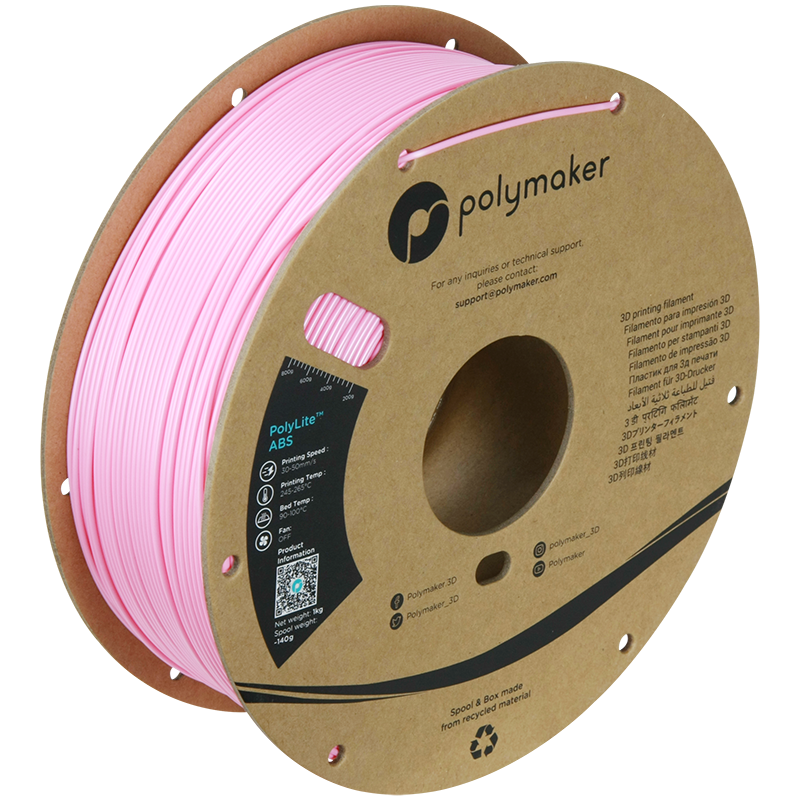
As 3D printing technology continues to improve, users are looking for materials that can produce reliable functional parts with consistent mechanical performance. ABS 3D printer filament meets these requirements by offering a combination of toughness, flexibility, and resistance to higher temperatures. Unlike standard PLA filament, ABS can handle more demanding applications where durability and heat resistance are important.
Another advantage of ABS plastic filament is its versatility in post-processing. Printed components can be sanded, drilled, cut, and modified according to specific project requirements. It also supports acetone vapor smoothing, which can create a smoother surface finish when performed with appropriate safety precautions. These characteristics make ABS suitable for everything from simple customized accessories to professional engineering prototypes.
ABS 3D Printer Filament Properties and Benefits
abs 3d printer filament offers several mechanical and physical properties that make it valuable for functional manufacturing. One of its most important characteristics is its excellent impact resistance. Unlike certain brittle printing materials, ABS can absorb physical shocks and withstand repeated handling without easily cracking. This makes it suitable for producing protective covers, mechanical components, equipment holders, and customized replacement parts.
Heat resistance is another significant advantage of ABS filament. It generally performs better than standard PLA in warmer environments, making it useful for products exposed to elevated temperatures. This property is particularly valuable for automotive accessories, electrical enclosures, and selected industrial components that require improved thermal performance.
ABS also provides a useful balance between rigidity and flexibility. It can maintain its shape during regular use while offering some flexibility under mechanical stress. This makes ABS 3D printing material suitable for components that experience vibration, pressure, and repeated handling.
Another important benefit is its excellent post-processing capability. ABS printed parts can be sanded to remove visible layer lines and improve surface quality. Users can also drill holes, cut sections, and modify printed components without necessarily damaging the entire structure. Acetone vapor smoothing is another popular finishing technique that helps create a glossy and polished appearance. However, acetone is highly flammable, so proper ventilation and suitable safety procedures are essential.
ABS filament is available in different colors, finishes, and spool sizes. The most common filament diameters include 1.75mm and 2.85mm, depending on the compatibility of the 3D printer. Manufacturers also offer specialized varieties, including high-impact ABS and modified ABS blends designed to provide improved mechanical characteristics.
Its affordability makes ABS an attractive material for both individual users and professional manufacturers. It provides a practical balance between material cost, durability, and printing performance, especially for projects that require stronger components than standard decorative prints.
ABS 3D Printing Settings and Applications
Using the correct ABS 3D printer filament settings is essential for achieving reliable printing results. Compared with PLA, ABS requires higher nozzle temperatures and a heated build plate. Most standard ABS materials have a recommended nozzle temperature between 220°C and 260°C, depending on the manufacturer and filament formulation.
The heated bed temperature generally ranges from 90°C to 110°C. Maintaining a consistent bed temperature improves first-layer adhesion and reduces the possibility of warping. An enclosed 3D printer is particularly useful because it helps maintain a stable temperature around the printed object.
Warping is one of the most common challenges associated with ABS 3D printing. As the material cools, it naturally contracts, which can cause the corners of a printed object to lift from the build plate. Sudden temperature changes can also result in cracks between printed layers. Proper bed preparation, controlled cooling, and a stable printing environment can significantly reduce these problems.
Moisture management is another important factor. Although ABS is generally less moisture-sensitive than some other engineering plastics, storing filament in a dry environment helps maintain consistent extrusion quality. Airtight storage containers and suitable desiccants can protect unused filament from humidity.
Ventilation is also essential when working with ABS. The printing process can release fumes and ultrafine particles, so users should operate their printers in a properly ventilated area. Suitable enclosure filtration or exhaust arrangements can help improve the printing environment.
ABS 3D printer filament has numerous applications across different industries. In automotive manufacturing, it is used for interior accessories, dashboard components, mounting brackets, protective housings, and customized replacement parts. Its combination of strength and heat resistance makes it useful for selected automotive projects.
The electronics industry also benefits from ABS 3D printing material. Engineers use it to manufacture electronic enclosures, sensor housings, protective cases, cable organizers, and customized equipment covers. These products can be designed according to specific dimensions and functional requirements.
In industrial manufacturing, ABS is commonly used for rapid prototyping and product development. Designers can create physical models to evaluate dimensions, assembly compatibility, and mechanical functionality before moving toward larger-scale production. This process helps reduce development costs and makes product improvements easier.
ABS is also suitable for household accessories, tool organizers, storage components, equipment holders, and various customized products. Its durability makes it a practical choice for objects that require regular handling and long-term functionality.
ABS 3D Printer Filament Compared with PLA, PETG, and ASA
Choosing the right 3D printing material depends on the requirements of the final product. ABS, PLA, PETG, and ASA are popular thermoplastic materials, but each offers different advantages in terms of strength, flexibility, heat resistance, and printing difficulty.
PLA filament is widely used by beginners because it is easy to print and requires relatively low temperatures. It produces minimal warping and provides excellent results for decorative models, prototypes, and general-purpose objects. However, PLA has lower heat resistance than ABS, which can limit its use in warmer environments.
PETG filament offers a combination of strength, flexibility, and relatively easy printing. It generally provides better impact resistance than standard PLA and is less prone to warping than ABS. PETG is commonly used for protective covers, containers, brackets, and functional household products.
ASA filament shares many mechanical properties with ABS but offers improved resistance to ultraviolet radiation and outdoor weather conditions. This makes ASA suitable for products exposed to sunlight and changing environmental conditions. ABS remains a popular choice for indoor functional components, engineering prototypes, and mechanical applications.
The difference between these materials becomes especially important when selecting filament for professional projects. PLA is suitable for simple printing requirements, PETG provides a useful balance of flexibility and strength, and ASA performs well in outdoor environments. ABS 3D printer filament is particularly valuable when impact resistance, durability, heat tolerance, and post-processing flexibility are important.
Selecting a suitable material also requires considering printer compatibility, printing temperatures, finished product dimensions, and the environment in which the component will operate.
Conclusion
ABS 3D printer filament remains an important material in modern additive manufacturing because of its excellent combination of strength, durability, impact resistance, and heat tolerance. Its versatility makes it suitable for automotive accessories, electronic enclosures, mechanical components, engineering prototypes, and various everyday products.
Although ABS requires higher printing temperatures, a heated build plate, proper ventilation, and a controlled printing environment, these requirements can be managed with suitable equipment and preparation. Choosing the correct nozzle temperature, maintaining proper bed adhesion, and controlling cooling can significantly improve print quality and reduce common issues such as warping and layer separation.
43.242.176.137
shell
ผู้เยี่ยมชม
benducket3211@gmail.com